Under $1,000 tier
What car insurance costs in Hawaii
Hawaii's average premium against the U.S., the higher minimum limits that took effect in 2026, and the state programs and tools that help you pay less.
By Guardbrook Editorial Team Updated 7 min read
At a glance
- Average yearly spend, 2023
- $888
- Change from 2022
- +5%
- Minimum liability limits
- 40/80/20
- Uninsured drivers, 2023
- 9.6%
Bottom line
In 2023 Hawaii drivers spent an average of $888 per insured car, 31% less than the U.S. average of $1,282, and full coverage averaged $998. Those figures predate a big change: since January 1, 2026, the minimum liability limits are 40/80/20, double the old 20/40/10, and the Insurance Division expects that to raise the average premium by about 25%. Hawaii also requires $10,000 of personal injury protection, bars credit history from auto pricing and gives free minimum coverage to drivers on certain public assistance.
The Hawaii bill, line by line
Guardbrook
Average car insurance bill, 2023
Hawaii
Liability$464
Collision$417
Comprehensive$117
Full coverage$998
Average spend per car$888
Compared with the U.S.−31%
Uninsured drivers9.6%
Average yearly premiums per insured car (NAIC); uninsured share: Insurance Research Council estimate. Averages, not a quote. Where these numbers come from
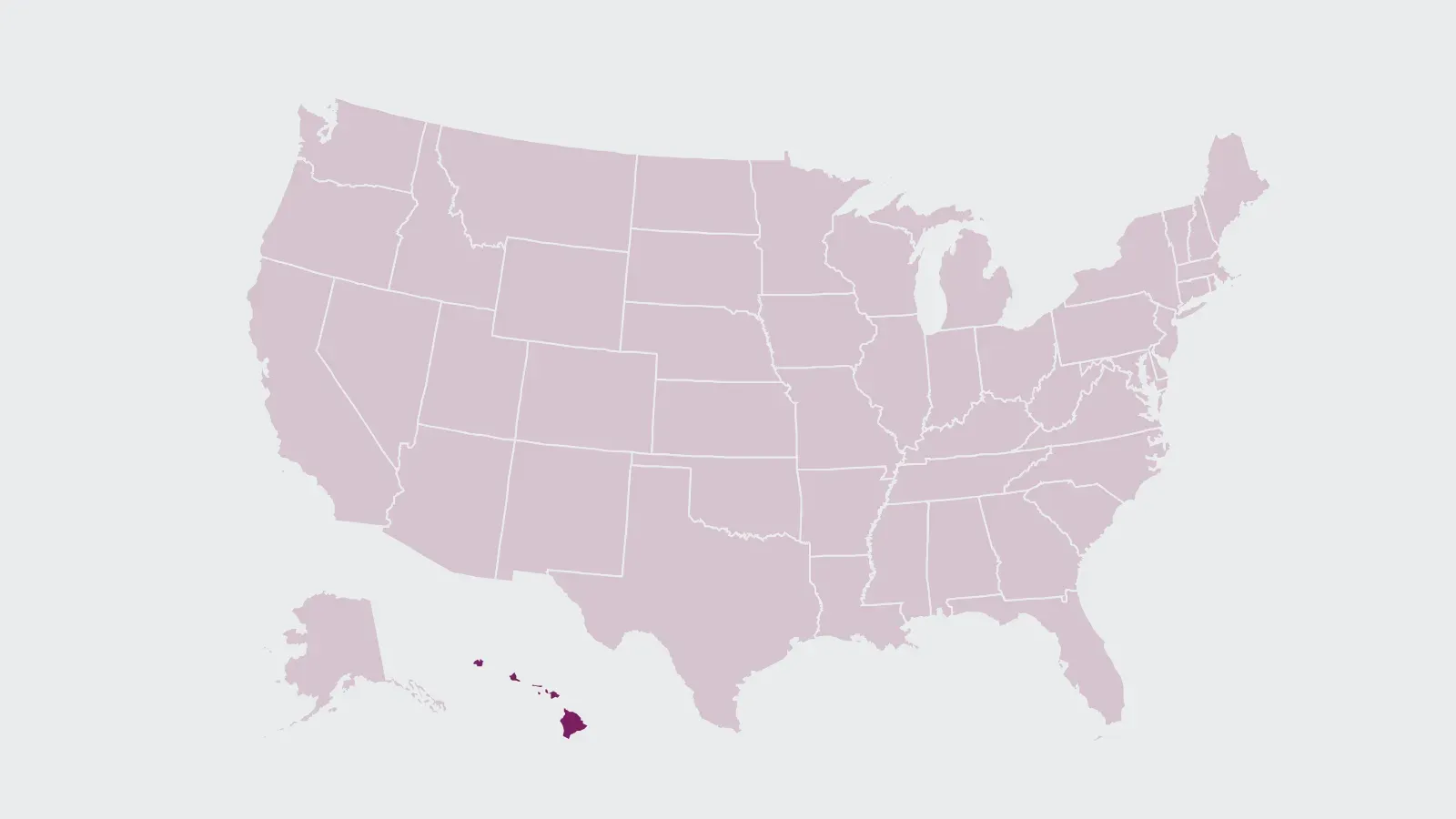
Price tier on the map
Under $1,000 a year
- Minimum liability limits
- 40/80/20
- Since January 1, 2026 (was 20/40/10); plus $10,000 PIP under the no-fault system
- Credit-based insurance scores
- Not allowed in auto pricing
- HRS § 431:10C-207 bars credit bureau ratings in auto rating plans
- Regulator
- Hawaii Insurance Division (Department of Commerce and Consumer Affairs)
Hawaii's 2023 premium against the U.S.
The National Association of Insurance Commissioners (NAIC) reports the premiums insurers actually earned in each state, and its most recent state year is 2023. Hawaii's average expenditure was $888 per insured car, only 5% above the $844 of 2022, the smallest increase of any state or D.C. in the table. Expenditure combines liability-only and fully covered cars; a car carrying all three main coverages averaged $998.
| Coverage | Hawaii | United States |
|---|---|---|
| Liability | $464 | $737 |
| Collision | $417 | $464 |
| Comprehensive | $117 | $238 |
| All three (combined premium) | $998 | $1,438 |
| Average expenditure | $888 | $1,282 |
Every line came in under the national average. Liability was about 37% lower, collision about 10% lower, and comprehensive, at $117, was roughly half the U.S. figure and the lowest in the 2023 table. The NAIC doesn't say why. Keep in mind that 2023 liability prices reflect the old 20/40/10 minimum, so a minimum-limits policy today buys more coverage and, per the Insurance Division, costs more.
Hawaii's required coverage since 2026
For personal auto policies that start or renew on or after January 1, 2026, Hawaii requires bodily injury liability of at least $40,000 per person and $80,000 per accident and property damage liability of $20,000 per accident. The Insurance Division explains that the old 20/40/10 limits were set many years ago and no longer kept pace with medical and repair costs.
- Personal injury protection (PIP) of at least $10,000 is still mandatory. It covers your own medical and rehabilitation costs regardless of fault, which is the no-fault part of Hawaii's system.
- Uninsured and underinsured motorist coverage must be offered to you. You can reject each one, but only in writing.
- Collision and comprehensive aren't statutory minimums, though a lender or leasing company may require them.
The Insurance Division also points out that a serious crash can exceed even the new limits. To see how higher liability or uninsured motorist limits would change your bill, read our guide to limits and deductibles.
Rate review and the credit ban
Insurers must file their rates and any rate increase requests with the Hawaii Insurance Division, which reviews them to make sure they are not excessive, inadequate or unfairly discriminatory. The Division also publishes a yearly Motor Vehicle Premium Comparison Guide that lists premiums from the insurers selling in Hawaii. Insurer rate filings can be looked up from the Division's website.
Credit plays no part. Hawaii Revised Statutes § 431:10C-207 forbids basing any auto standard or rating plan, directly or indirectly, on a credit bureau rating. If you've moved from a state where credit counted, your score won't follow you into a Hawaii quote; see our page on credit-based insurance scores for how other states handle it.
Free coverage and the joint underwriting plan
Hawaii runs a joint underwriting plan, supervised by the Insurance Commissioner, for drivers who can't reasonably get insurance at regular rates or can't get it at all through ordinary channels. AIPSO, which administers such plans, lists it as the Hawaii Joint Underwriting Plan. The same plan carries one of the state's consumer programs: free minimum coverage for some drivers on public assistance.
Licensed drivers who receive public assistance in the form of direct cash payments, or Supplemental Security Income, can get coverage through the plan, and no premium is charged for the mandatory minimum PIP, bodily injury and property damage coverage. The program does not include the uninsured and underinsured motorist offers. Our overview of state low-cost auto insurance programs compares it with programs elsewhere.
Getting a lower Hawaii premium
- Start with the state's comparison guide. The Insurance Division's Motor Vehicle Premium Comparison Guide shows what insurers charge; use it to pick two or three companies, then request quotes on the same coverage.
- Ask about the discounts the Division lists: a defensive driving course, a claims-free record, a vehicle with advanced safety features and membership in an eligible group. None is required by law, so amounts vary by insurer.
- Rethink the deductible. Collision is already below the U.S. average here, but a higher deductible can still trim it; the deductible break-even calculator shows how long it takes to come out ahead.
- Call the Insurance Division with problems. Its consumer line is 1-844-808-DCCA (3222), and the Division publishes complaint ratios by insurer and takes complaints online.
Questions drivers ask
What are the minimum car insurance limits in Hawaii in 2026?
40/80/20: $40,000 per person and $80,000 per accident for bodily injury and $20,000 for property damage, for policies starting or renewing on or after January 1, 2026. PIP of at least $10,000 is also required.
Will the new minimums raise my premium?
They may. The Insurance Division says doubling the prior limits may raise the average premium by about 25%, with individual results depending on your record, vehicle and claims history.
Can a Hawaii insurer use my credit score?
No. HRS § 431:10C-207 bars insurers from basing auto rating plans or standards on a credit bureau rating.
Is there free car insurance in Hawaii?
Licensed drivers receiving public assistance cash payments or SSI can get the mandatory minimum PIP, bodily injury and property damage coverage through the joint underwriting plan with no premium charged.
Where the figures come from
- NAIC — Auto Insurance Database Report 2022/2023 (state average premiums and expenditures)
- Hawaii Insurance Division — 2026 Auto Insurance Minimum Limits FAQs
- Hawaii Insurance Division — Auto Insurance FAQs
- Hawaii Insurance Division — Consumer resources and premium comparison guide
- HRS § 431:10C-207 — Prohibited rating factors (Justia, 2025)
- HRS § 431:10C-301 — Required motor vehicle policy coverage (Justia, 2025)
- HRS § 431:10C-407 — Joint underwriting plan (Justia, 2025)
- HRS § 431:10C-410 — Public assistance drivers (Justia, 2025)
- AIPSO — Plan sites (Hawaii Joint Underwriting Plan)
- Insurance Information Institute — Uninsured motorists (Insurance Research Council estimates)
Facts on this page were checked against these sources on October 26, 2026. NAIC averages are for 2023, the latest year the NAIC has published by state; Hawaii's 40/80/20 minimum limits took effect on January 1, 2026.
Have your rate shopped
Averages can't price your car and your record. Tell us the basics of your policy and Guardbrook passes them to licensed insurance agents and insurers who can quote it; you decide whether to switch.
- 1 Your cars, drivers and current policy.
- 2 How agents can reach you, and your consent.
- 3 A licensed insurance agent or insurer contacts you with quotes. Your policy stays as it is until you decide to switch.
Guardbrook is not an insurance company or agency and doesn't sell, quote or bind policies. You pay Guardbrook nothing; the licensed insurance agents and insurers who contact you set their own prices and terms. How we make money.
Read next
-

Price factor
Coverage limits and deductibles
What 25/50/25 means, why liability is about half of a $1,438 full-coverage bill, and how to size a deductible.
-

Shopping guide
State low-cost programs
California's 10/20/3 policy, New Jersey's $365 Medicaid policy, Hawaii's free minimums and Maryland's MAIF.
-

Shopping guide
Comparing quotes line by line
Match limits, deductibles and add-ons, list every driver, compare totals with fees, then check the company.