$1,000–$1,249 tier
What car insurance costs in West Virginia
West Virginia's average premium against the U.S. figure, the coverage every policy must carry, and the state tools that help you compare.
By Guardbrook Editorial Team Updated 6 min read
At a glance
- Average yearly spend, 2023
- $1,063
- Change from 2022
- +12%
- Minimum liability limits
- 25/50/25
- Uninsured drivers, 2023
- 7.8%
Bottom line
West Virginia drivers spent an average of $1,063 per insured car in 2023, about 17% less than the U.S. average of $1,282, and a car with all three main coverages averaged $1,227. The state requires 25/50/25 liability and uninsured motorist coverage at the same 25/50/25 level. Large auto liability increases must be posted for public comment, and the Insurance Commissioner publishes an annual survey of minimum-coverage prices.
The West Virginia bill, line by line
Guardbrook
Average car insurance bill, 2023
West Virginia
Liability$523
Collision$402
Comprehensive$302
Full coverage$1,227
Average spend per car$1,063
Compared with the U.S.−17%
Uninsured drivers7.8%
Average yearly premiums per insured car (NAIC); uninsured share: Insurance Research Council estimate. Averages, not a quote. Where these numbers come from
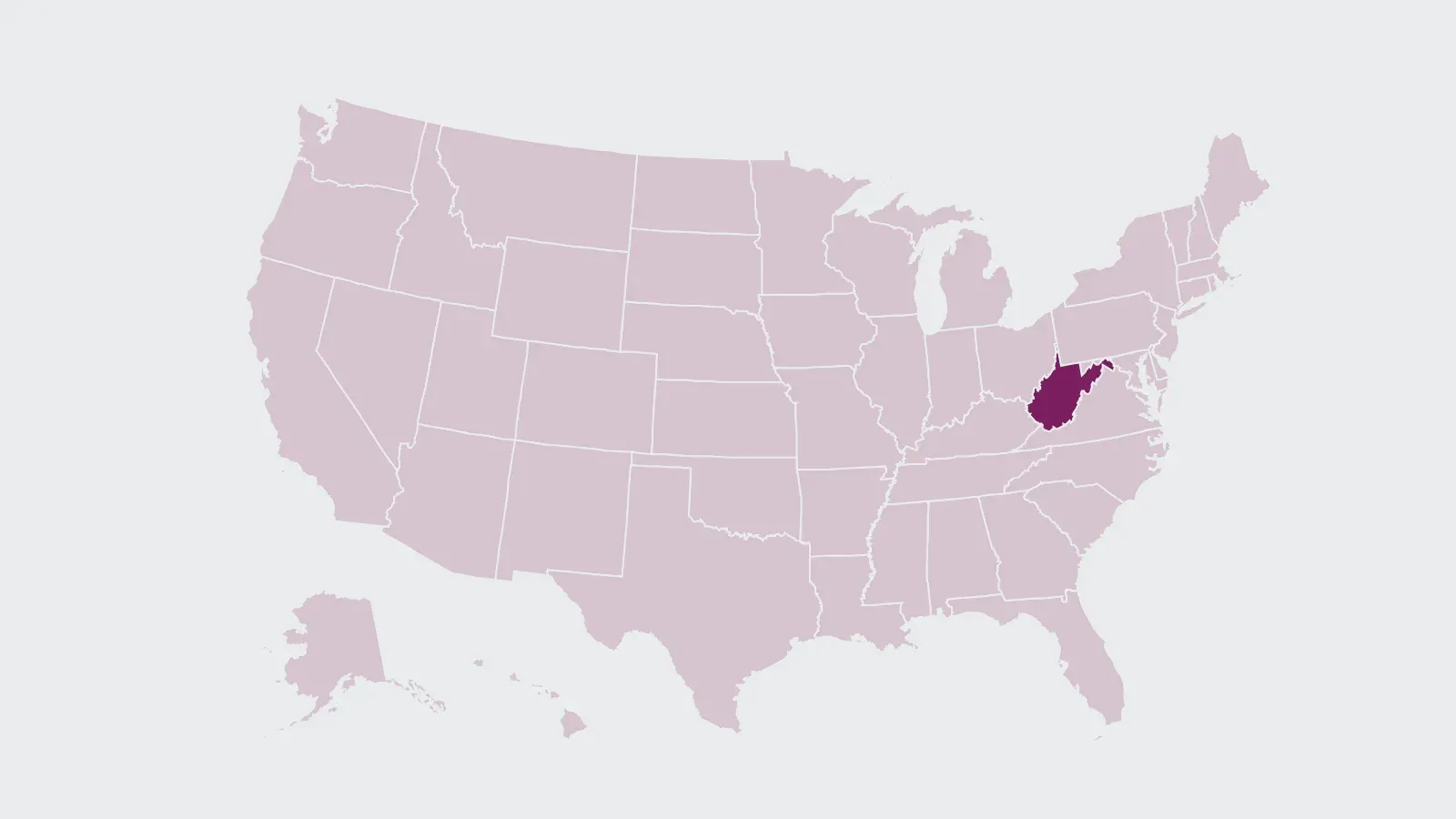
Price tier on the map
$1,000 to $1,249 a year
- Minimum liability limits
- 25/50/25
- Uninsured motorist coverage required at 25/50/25; higher UM and underinsured coverage must be offered
- Credit-based insurance scores
- Used in pricing
- OIC Bulletin 24-04 lists changes in insurance credit scoring among reasons a premium can rise
- Regulator
- West Virginia Offices of the Insurance Commissioner
West Virginia's bill against the U.S.
The National Association of Insurance Commissioners (NAIC) adds up what insurers collected in each state. In 2023, the most recent year it has published by state, the average West Virginia expenditure was $1,063 per insured car, 12% more than the $953 of 2022. Expenditure includes liability-only cars; for a car with liability, collision and comprehensive, the combined premium was $1,227.
| Coverage | West Virginia | United States |
|---|---|---|
| Liability | $523 | $737 |
| Collision | $402 | $464 |
| Comprehensive | $302 | $238 |
| All three (combined premium) | $1,227 | $1,438 |
| Average expenditure | $1,063 | $1,282 |
Liability is the main reason the state's bill is lower: at $523 it is about 29% below the national average. Comprehensive goes the other way. At $302 it is about 27% above the U.S. figure, so the part of a full-coverage policy that pays for non-collision damage costs more here than in a typical state. When you price a newer car, expect that line to matter; see how make and model affect the price.
West Virginia's required coverage
State law sets proof of financial responsibility at $25,000 for injury or death of one person, $50,000 for two or more people and $25,000 for property damage in one accident. Those limits have applied since January 1, 2016. The West Virginia Offices of the Insurance Commissioner (OIC) lists the same 25/50/25 as the mandatory minimum.
- Uninsured motorist coverage is required on every policy, at a minimum of $25,000/$50,000 for injuries and $25,000 for property damage.
- Insurers must offer more. You can buy higher uninsured motorist limits and underinsured motorist coverage, which helps when the at-fault driver has too little insurance.
- Collision and comprehensive aren't required by the state. The OIC has a separate explainer on what "full coverage" really means, and a lender will usually require both on a financed car.
At an estimated 7.8% in 2023, West Virginia's share of uninsured drivers was about half the 15.4% national rate, according to the Insurance Research Council. Underinsured drivers with minimum limits are a separate risk; our page on limits and deductibles helps you decide how much to carry.
How the state oversees prices
The OIC does not set rates. Insurers usually file proposed rates before using them, and a filing takes effect after a waiting period unless the OIC disapproves it as excessive, inadequate or unfairly discriminatory. For an auto liability increase of 15% or more, the OIC must publish notice in the State Register and on its website, and consumers may comment until it acts.
The OIC's bulletin on rates lists changes in insurance credit scoring among the reasons a bill can rise, so credit can affect what you pay here. If your premium went up, ask your agent or company to explain the cause, as the bulletin suggests. More on credit-based insurance scores.
The West Virginia Automobile Insurance Plan
If you can't get coverage in the voluntary market, the West Virginia Automobile Insurance Plan (WVAIP) can provide it. Applicants are shared among all insurers licensed to write auto insurance in the state. You may be eligible with a valid West Virginia driver's license and a vehicle registered in West Virginia; an agent or broker can help you apply. Our guide to assigned risk plans explains what to expect.
Ways to pay less in West Virginia
- Start with the Annual Auto Survey. The OIC publishes a yearly survey of minimum auto liability premiums by company. Use it, or an independent agent, to compare companies on the same coverage.
- Make sure every discount is applied. The OIC advises checking that you receive all the discounts and credits you qualify for.
- Think before you switch. The OIC notes that moving to a new insurer may cost you some protection against nonrenewal, so weigh the saving.
- Ask the OIC for help. Property and casualty consumer services: (304) 720-8580 or 1-888-TRY-WVIC (888-879-9842). File a signed complaint online or on paper; an inquiry usually takes about 60 days.
Questions drivers ask
Is car insurance in West Virginia cheaper than the national average?
On average, yes. NAIC data for 2023 put West Virginia's average expenditure at $1,063 per insured car against $1,282 nationally, and the full-coverage combined premium at $1,227 against $1,438.
What car insurance is required in West Virginia?
Liability of $25,000 per person, $50,000 per accident and $25,000 for property damage, plus uninsured motorist coverage at the same 25/50/25 minimum.
Can I comment on a proposed rate increase in West Virginia?
Yes. For auto liability increases of 15% or more, the Insurance Commissioner publishes a notice and accepts public comments until it acts on the filing.
Where can I compare West Virginia auto insurance prices?
The Offices of the Insurance Commissioner publish an Annual Auto Survey of minimum liability premiums by company. For your own quotes, see comparing quotes line by line.
Where the figures come from
- NAIC — Auto Insurance Database Report 2022/2023 (state average premiums and expenditures)
- West Virginia Offices of the Insurance Commissioner — Property and casualty consumer services
- West Virginia Offices of the Insurance Commissioner — Mandatory limits
- West Virginia Offices of the Insurance Commissioner — Bulletin 24-04 on home and auto insurance rates (June 5, 2024)
- West Virginia Code § 17D-4-2 — Proof of financial responsibility (Justia)
- West Virginia Code § 33-6-31 — Uninsured and underinsured motorist coverage (Justia)
- Insurance Information Institute — Uninsured motorists (Insurance Research Council estimates)
Facts on this page were checked against these sources on October 26, 2026. NAIC averages are for 2023, the latest year the NAIC has published by state.
Have your rate shopped
Averages can't price your car and your record. Tell us the basics of your policy and Guardbrook passes them to licensed insurance agents and insurers who can quote it; you decide whether to switch.
- 1 Your cars, drivers and current policy.
- 2 How agents can reach you, and your consent.
- 3 A licensed insurance agent or insurer contacts you with quotes. Your policy stays as it is until you decide to switch.
Guardbrook is not an insurance company or agency and doesn't sell, quote or bind policies. You pay Guardbrook nothing; the licensed insurance agents and insurers who contact you set their own prices and terms. How we make money.
Read next
-
Price factor
Vehicle make and model
The car drives collision and comprehensive, $464 and $238 a year on average in 2023. How to check a model first.
-
Shopping guide
Complaining about a rate increase
Ask the insurer, use your adverse action rights, read the filing, then complain; Maryland gives you 30 days.
-
Way to save
Safe driver discounts
California's Good Driver rates must be at least 20% lower. What qualifies and what can cost you the discount.