Under $1,000 tier
What car insurance costs in Wisconsin
The average Wisconsin premium against the national one, the coverage state law adds to every policy, and what the insurance office says about saving.
By Guardbrook Editorial Team Updated 6 min read
At a glance
- Average yearly spend, 2023
- $922
- Change from 2022
- +14%
- Minimum liability limits
- 25/50/10
- Uninsured drivers, 2023
- 15.6%
Bottom line
Wisconsin drivers spent an average of $922 per insured car in 2023, about 28% below the U.S. average of $1,282, and a car with all three main coverages averaged $1,000. The state requires 25/50/10 liability plus uninsured motorist coverage of at least $25,000/$50,000. Underinsured motorist coverage is optional but must be offered. The Office of the Commissioner of Insurance says credit should not be the sole reason to refuse, cancel or nonrenew a policy.
The Wisconsin bill, line by line
Guardbrook
Average car insurance bill, 2023
Wisconsin
Liability$447
Collision$315
Comprehensive$239
Full coverage$1,000
Average spend per car$922
Compared with the U.S.−28%
Uninsured drivers15.6%
Average yearly premiums per insured car (NAIC); uninsured share: Insurance Research Council estimate. Averages, not a quote. Where these numbers come from
Price tier on the map
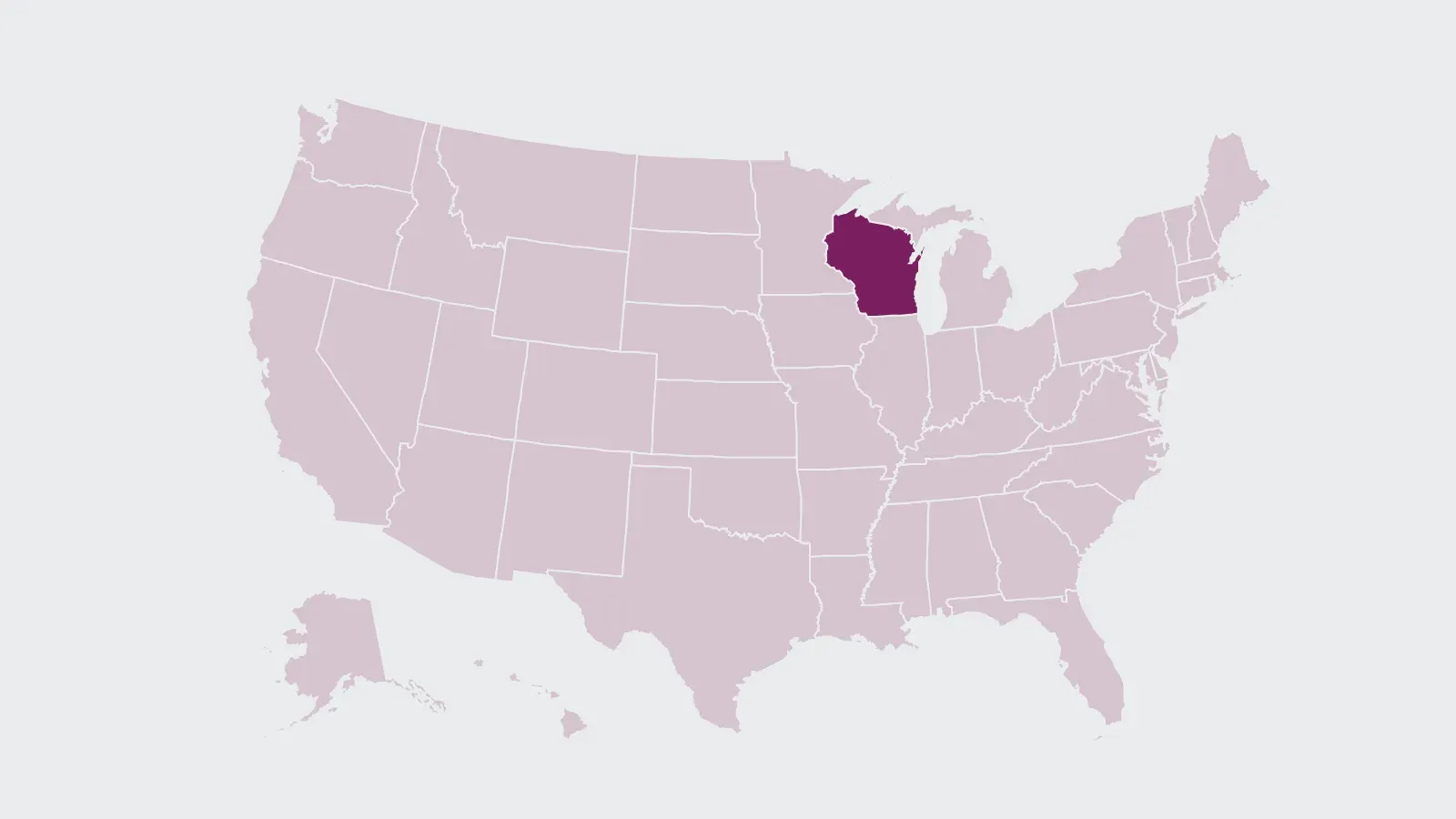
Under $1,000 a year
- Minimum liability limits
- 25/50/10
- Uninsured motorist coverage of $25,000/$50,000 required; underinsured motorist optional but must be offered
- Credit-based insurance scores
- Allowed, not as the only factor
- OCI consumer guide: not the sole reason to refuse, cancel a new policy or nonrenew; no unfair discrimination
- Regulator
- Wisconsin Office of the Commissioner of Insurance
Wisconsin's bill compared with the U.S.
The National Association of Insurance Commissioners (NAIC) publishes what insurers collected per insured car in each state. Its 2023 tables, the latest by state, put the average Wisconsin expenditure at $922, up 14% from $810 in 2022, the same rate of increase as the country as a whole. A car carrying liability, collision and comprehensive had a combined average premium of $1,000.
| Coverage | Wisconsin | United States |
|---|---|---|
| Liability | $447 | $737 |
| Collision | $315 | $464 |
| Comprehensive | $239 | $238 |
| All three (combined premium) | $1,000 | $1,438 |
| Average expenditure | $922 | $1,282 |
Liability ($447) and collision ($315) are both far below the national averages, by about 39% and 32%. Comprehensive is the exception: at $239 it is essentially the U.S. figure. So comprehensive makes up a larger share of a Wisconsin full-coverage bill than it does nationally, which makes its deductible one of the first places to look when you review your policy. See limits and deductibles.
What Wisconsin adds to every policy
You may not drive in Wisconsin without liability insurance. The minimum is $25,000 for injury or death of one person, $50,000 for injury or death of two or more people and $10,000 for property damage.
- Uninsured motorist coverage of at least $25,000 per person and $50,000 per accident, for bodily injury only, is mandatory.
- Underinsured motorist coverage is not mandatory. Your insurer must tell you it is available, and you may reject it. If you buy it, the limits must be at least $50,000 per person and $100,000 per accident.
- Medical payments coverage of at least $1,000 per person must be included in the policy, but the named insured may reject it.
The Insurance Research Council estimated that 15.6% of Wisconsin drivers were uninsured in 2023, close to the 15.4% national rate. Because the required uninsured motorist coverage pays only for injuries, damage to your own car from an uninsured driver falls to your own collision coverage, if you carry it.
Credit and rate filings in Wisconsin
The Office of the Commissioner of Insurance (OCI) requires insurers to file surcharges with it and to apply them uniformly. Rate differences between classes of drivers also need credible supporting information filed with the OCI.
Insurers may use credit information, but it must not be used in a way that is unfairly discriminatory. The OCI's position is that credit should not be the sole reason to refuse an application, cancel a new policy within its first 60 days or nonrenew a policy. If credit leads to a denial, you can review the report for accuracy at no charge. More on credit-based insurance scores.
The Wisconsin Automobile Insurance Plan
If several insurers have turned you down, you can likely get coverage through the Wisconsin Automobile Insurance Plan (WAIP), created by state law. The OCI warns that its rates are usually somewhat higher than in the voluntary market and suggests you keep shopping while you are on the plan. WAIP can be reached at 800-827-5964. Our guide to assigned risk plans covers the process.
Ways to trim a Wisconsin premium
- Shop around. The OCI's consumer guide says prices for the same coverage can vary greatly between insurers, so compare at least three quotes on matching limits.
- Ask about the discounts the OCI lists. Its guide mentions a package discount of up to 15% for home and auto with one insurer, good student discounts that typically run 10% to 20% for a B average, multi-car, claim-free, nonsmoker and pay-in-full discounts, and usage-based programs.
- Test the deductible. The deductible break-even calculator shows how many claim-free years a higher deductible needs to pay off.
- Complain in writing. Contact the insurer or agent first. If that fails, file online at the OCI's complaints page; the OCI does not accept complaints by phone, but you can call 1-800-236-8517 for help.
Questions drivers ask
Is Wisconsin car insurance cheaper than the U.S. average?
On average, yes. NAIC data for 2023 put Wisconsin's average expenditure at $922 per insured car against $1,282 nationally, and the full-coverage combined premium at $1,000 against $1,438.
What insurance is required to drive in Wisconsin?
Liability of $25,000 per person, $50,000 per accident and $10,000 for property damage, plus uninsured motorist coverage of at least $25,000/$50,000 for bodily injury.
Is underinsured motorist coverage required in Wisconsin?
No. Your insurer must tell you it's available, and you can reject it. If you buy it, limits must be at least $50,000 per person and $100,000 per accident.
What is the Wisconsin Automobile Insurance Plan?
A state-created plan that insures drivers who can't find coverage elsewhere, usually at somewhat higher rates. See assigned risk plans.
Where the figures come from
- NAIC — Auto Insurance Database Report 2022/2023 (state average premiums and expenditures)
- Wisconsin Office of the Commissioner of Insurance — Consumer's Guide to Auto Insurance (PI-057, revised October 2026)
- Wisconsin Office of the Commissioner of Insurance — Consumer's Guide to Auto Insurance page
- Wisconsin Statutes § 344.33 — Motor vehicle policy of liability insurance (Justia)
- Wisconsin Statutes § 632.32 — Uninsured and underinsured motorist provisions (Justia)
- Insurance Information Institute — Uninsured motorists (Insurance Research Council estimates)
Facts on this page were checked against these sources on October 26, 2026. NAIC averages are for 2023, the latest year the NAIC has published by state.
Have your rate shopped
Averages can't price your car and your record. Tell us the basics of your policy and Guardbrook passes them to licensed insurance agents and insurers who can quote it; you decide whether to switch.
- 1 Your cars, drivers and current policy.
- 2 How agents can reach you, and your consent.
- 3 A licensed insurance agent or insurer contacts you with quotes. Your policy stays as it is until you decide to switch.
Guardbrook is not an insurance company or agency and doesn't sell, quote or bind policies. You pay Guardbrook nothing; the licensed insurance agents and insurers who contact you set their own prices and terms. How we make money.
Read next
-
Price factor
Coverage limits and deductibles
What 25/50/25 means, why liability is about half of a $1,438 full-coverage bill, and how to size a deductible.
-

Way to save
Good student discount
Wisconsin's regulator says it typically runs 10% to 20% for a B average. Georgia requires one by law.
-
Shopping guide
Assigned-risk plans
Turned down twice in Texas or Maryland? How state plans place you, what they cover and how to get back out.