Rating rules
How gender and marital status can change your car insurance price
In most states, insurers may use both. Six states bar gender, and three also bar marital status. Here is where each rule applies and what to check on your own policy.
By Guardbrook Editorial Team Updated 6 min read
At a glance
- Gender rating banned
- CA, HI, MA, MI, NC, PA
- Marital status banned
- HI, MA, MI
- Allowed elsewhere
- Varies by insurer
- When to re-quote
- Marriage or divorce

Bottom line
Gender and marital status are optional rating factors: an insurer may use them where state law allows, and each company decides how much they weigh. California, Hawaii, Massachusetts, Michigan, North Carolina and Pennsylvania don't allow gender in car insurance pricing, and Hawaii, Massachusetts and Michigan also bar marital status. Several other states keep both out of the credit-based insurance score, even where they may count elsewhere in the price. If you marry, divorce or are widowed, tell your insurer and compare quotes: the change can move your price in either direction depending on the company.
How insurers use gender and marital status
Insurers build their prices from claims data, and in most states they may sort drivers by sex and marital status if their filed rating plan does so. State insurance departments list both among the factors that can affect a premium: Indiana's department names age, sex and marital status next to driving record and the vehicle, and the Louisiana Department of Insurance's consumer guide says gender and marital status may affect a premium.
Neither factor has to work in isolation. An insurer's plan can combine them with age and driving experience, so the effect of being a man or a woman, single or married, may differ for a teen and for a 50-year-old, and from one company to the next. Regulators don't publish a single figure for either factor, and you shouldn't trust one that claims to apply to everyone.
If you want to know whether a company uses either factor, ask it. Rate filings are another route: in Indiana, for example, each insurer files its rates with the Department of Insurance before using them, the rates must not be excessive, inadequate or unfairly discriminatory, and the filings are open to the public. A filed rating plan shows which factors a company uses, even if it doesn't show your own price.
States that ban gender rating
| State | Rule |
|---|---|
| California | Gender may not be used in private passenger auto rating (Department of Insurance regulation, effective January 1, 2019) |
| Hawaii | No auto standard or rating plan may be based, directly or indirectly, on sex, marital status, age or length of driving experience, among other traits (HRS § 431:10C-207) |
| Massachusetts | Risks may not be grouped by sex or marital status for auto rates (M.G.L. c. 175E, § 4) |
| Michigan | Insurers can't use sex or marital status in setting a driver's rates (2019 auto insurance reform) |
| North Carolina | No rating plan for private passenger cars may be based on the age or sex of the people insured (G.S. § 58-3-25) |
| Pennsylvania | Rates can't be based on an applicant's race, religion, national origin or gender |
California's rule came from a Department of Insurance regulation that took effect on January 1, 2019 and required insurers to file class plans without gender. Hawaii's law dates to 1987 and North Carolina's has applied since September 1, 1975. Both reach further than gender: Hawaii also bars age, marital status and length of driving experience, and North Carolina also bars age.
Montana is often listed with these states, but its law changed. Its anti-discrimination statute (MCA § 49-2-309) still bars discrimination solely on sex or marital status in insurance, yet since a 2021 amendment it lets insurers use accepted ratemaking methods based on sex or marital status in setting premium rates, except where federal health insurance rules forbid it. Ask a Montana insurer directly whether its auto plan uses either factor.
In the six states in the table, a man and a woman with the same record, car, address and coverage should get the same quote from the same company. If one doesn't, ask the insurer which factors produced the difference. The Pennsylvania and Michigan cost pages show what else those laws keep out of the price.
Marital status, and where it can't count
Three states keep marital status out of the rate itself. Michigan's 2019 reform bars sex, marital status, home ownership, credit score, education, occupation and ZIP code from a driver's rates; Massachusetts doesn't let insurers group auto risks by marital status; and Hawaii forbids any rating plan based on it. Elsewhere, marital status may count in the rate, but several states keep it, and gender, out of the credit-based insurance score that many insurers use:
- Arizona bars income, gender, address, ZIP code, ethnic group, religion, marital status and nationality from the score (A.R.S. § 20-2110).
- Maine bars income, address, ZIP code, marital status, race and sex from the score (24-A M.R.S. § 2169-B).
- Tennessee bars income, gender, address, ethnic group, religion, marital status, nationality, education and occupation (Tenn. Code § 56-5-402).
- Virginia bars income, gender, address, ZIP code, race, marital status and total available credit (Va. Code § 38.2-2234).
Oregon adds a protection for life events: an insurer can't re-rate you on credit because your marital status changed through the death of a spouse or a divorce. Our page on credit-based insurance scores covers the rest of those rules.
Nonbinary drivers and gender markers
If your driver's license carries an X gender marker, or you don't identify as male or female, where you live decides how much it matters. In the states that ban gender rating, the marker can't change your price, because the insurer may not use gender at all. In other states, insurers set their own rules for drivers who don't list male or female. If that applies to you, ask each company how it rates you before you buy, and compare the answers alongside the prices.
What to do after a life change
- Tell your insurer when you marry, divorce or are widowed, and update the drivers and cars on the policy. A driver who moves out, or a spouse who joins, changes the policy as much as the status itself.
- Get quotes both ways. If you are marrying, compare one combined policy with two separate ones, on the same coverage. Use our guide to when to shop to time it with your renewal.
- Check the declarations page after any change to make sure your status, drivers and discounts are listed correctly.
- Ask for an explanation if a quote in a state that bans gender rating differs between otherwise identical drivers, and complain to the state insurance department if the answer doesn't hold up.
Questions drivers ask
Which states don't allow gender in car insurance pricing?
California, Hawaii, Massachusetts, Michigan, North Carolina and Pennsylvania. Montana's law has allowed sex-based ratemaking methods since 2021. In other states, insurers may use gender if their filed rating plan does.
Do married people pay less for car insurance?
It depends on the insurer and the state. Where marital status is allowed, each company decides how it counts; Hawaii, Massachusetts and Michigan don't allow it in auto rates. Compare quotes after you marry.
Can my credit-based insurance score use my gender or marital status?
Not in states such as Arizona, Maine, Tennessee and Virginia, whose laws keep both out of the score. See credit-based insurance scores.
Does an X gender marker change my car insurance price?
Not in states that ban gender rating. Elsewhere, insurers set their own rules, so ask each company how it rates you.
Where the figures come from
- California Department of Insurance — Press release on eliminating gender as an auto rating factor (2019)
- Hawaii Revised Statutes § 431:10C-207
- Michigan DIFS — Consumer protections in the auto insurance law
- Massachusetts General Laws c. 175E, § 4 — Standards for making and use of rates
- Montana Code Annotated § 49-2-309 — Discrimination in insurance and retirement plans
- N.C. Gen. Stat. § 58-3-25 — Discriminatory practices prohibited
- Pennsylvania Insurance Department — Auto insurance guide
- Indiana Department of Insurance — Auto insurance
- Louisiana Department of Insurance — Consumer's Guide to Auto Insurance
- Arizona Revised Statutes § 20-2110
- Maine Revised Statutes, Title 24-A, § 2169-B
- Tennessee Code § 56-5-402 (Justia)
- Code of Virginia § 38.2-2234 — Use of credit information in motor vehicle insurance
- Oregon Revised Statutes § 746.661
Facts on this page were checked against these sources on October 26, 2026. Where a state allows gender or marital status, how much either counts is set by each insurer's filed rating plan.
Have your rate shopped
Averages can't price your car and your record. Tell us the basics of your policy and Guardbrook passes them to licensed insurance agents and insurers who can quote it; you decide whether to switch.
- 1 Your cars, drivers and current policy.
- 2 How agents can reach you, and your consent.
- 3 A licensed insurance agent or insurer contacts you with quotes. Your policy stays as it is until you decide to switch.
Guardbrook is not an insurance company or agency and doesn't sell, quote or bind policies. You pay Guardbrook nothing; the licensed insurance agents and insurers who contact you set their own prices and terms. How we make money.
Read next
-

Price factor
Age and driving experience
Teens have almost 3x the fatal crash rate of drivers 20+; HI, MA and NC limit age rating. Course discounts from 55.
-

Shopping guide
When to shop for car insurance
Renewal notices (45 days ahead in Maryland), moves, new cars and drivers, and old tickets that stop counting.
-
State cost
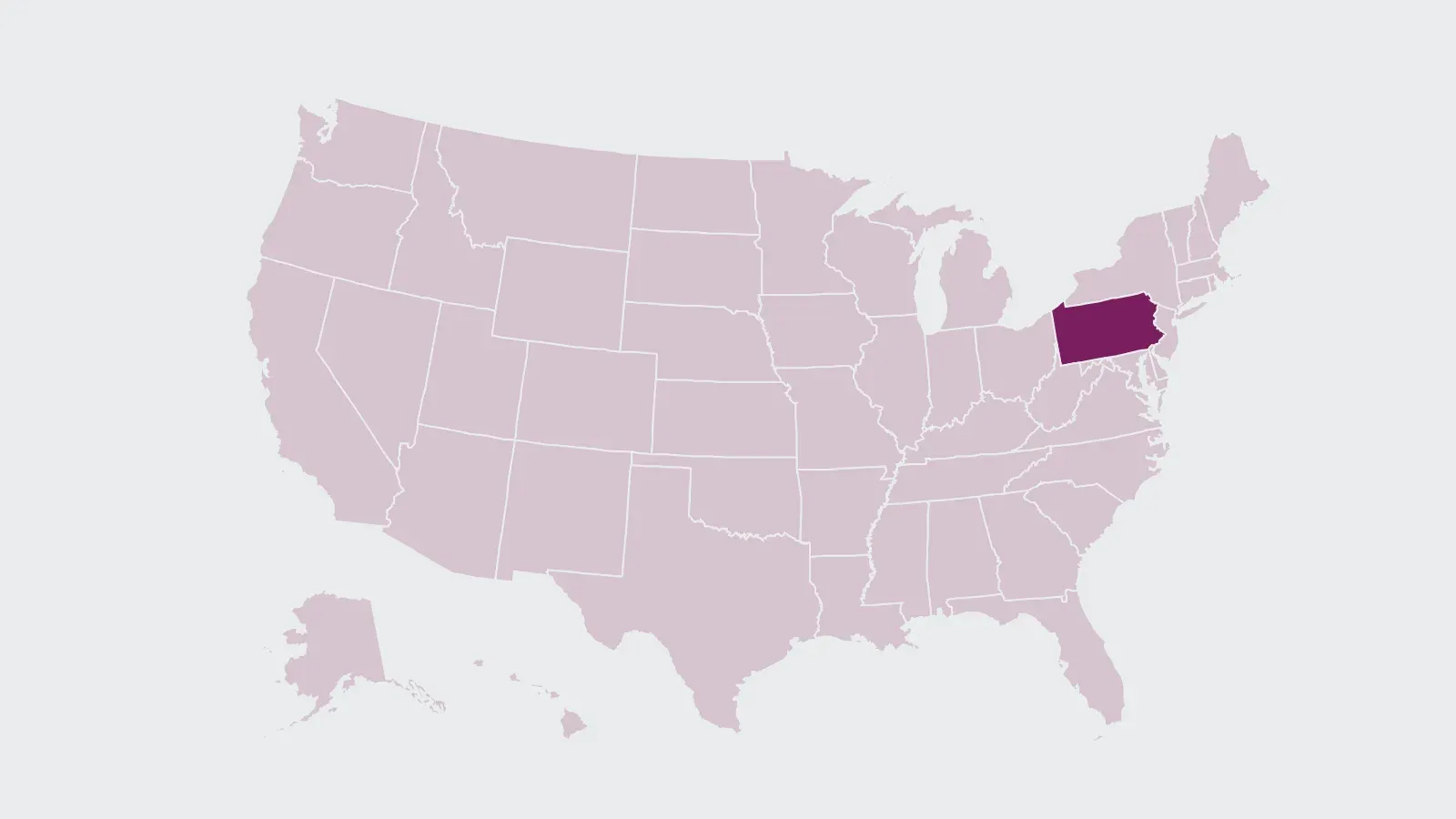
Pennsylvania
$1,155 average spend in 2023 (−10% vs. U.S.); full coverage $1,274; 15/30/5 minimum; full or limited tort.