$1,250–$1,499 tier
What car insurance costs in Texas
The average Texas bill, line by line, against the U.S. average; the state rules behind the price; and where a Texan can cut it.
By Guardbrook Editorial Team Updated 6 min read
At a glance
- Average yearly spend, 2023
- $1,429
- Change from 2022
- +16%
- Minimum liability limits
- 30/60/25
- Uninsured drivers, 2023
- 14.5%
Bottom line
Texas drivers spent an average of $1,429 per insured car in 2023, about 11% more than the U.S. average of $1,282, and a car with liability, collision and comprehensive averaged $1,727. The state requires 30/60/25 liability and builds PIP into every policy unless you turn it down in writing. Insurers set their own rates without approval in advance, so quotes for the same driver can differ widely: comparing them is the most direct way to pay less.
The Texas bill, line by line
Guardbrook
Average car insurance bill, 2023
Texas
Liability$798
Collision$529
Comprehensive$400
Full coverage$1,727
Average spend per car$1,429
Compared with the U.S.+11%
Uninsured drivers14.5%
Average yearly premiums per insured car (NAIC); uninsured share: Insurance Research Council estimate. Averages, not a quote. Where these numbers come from
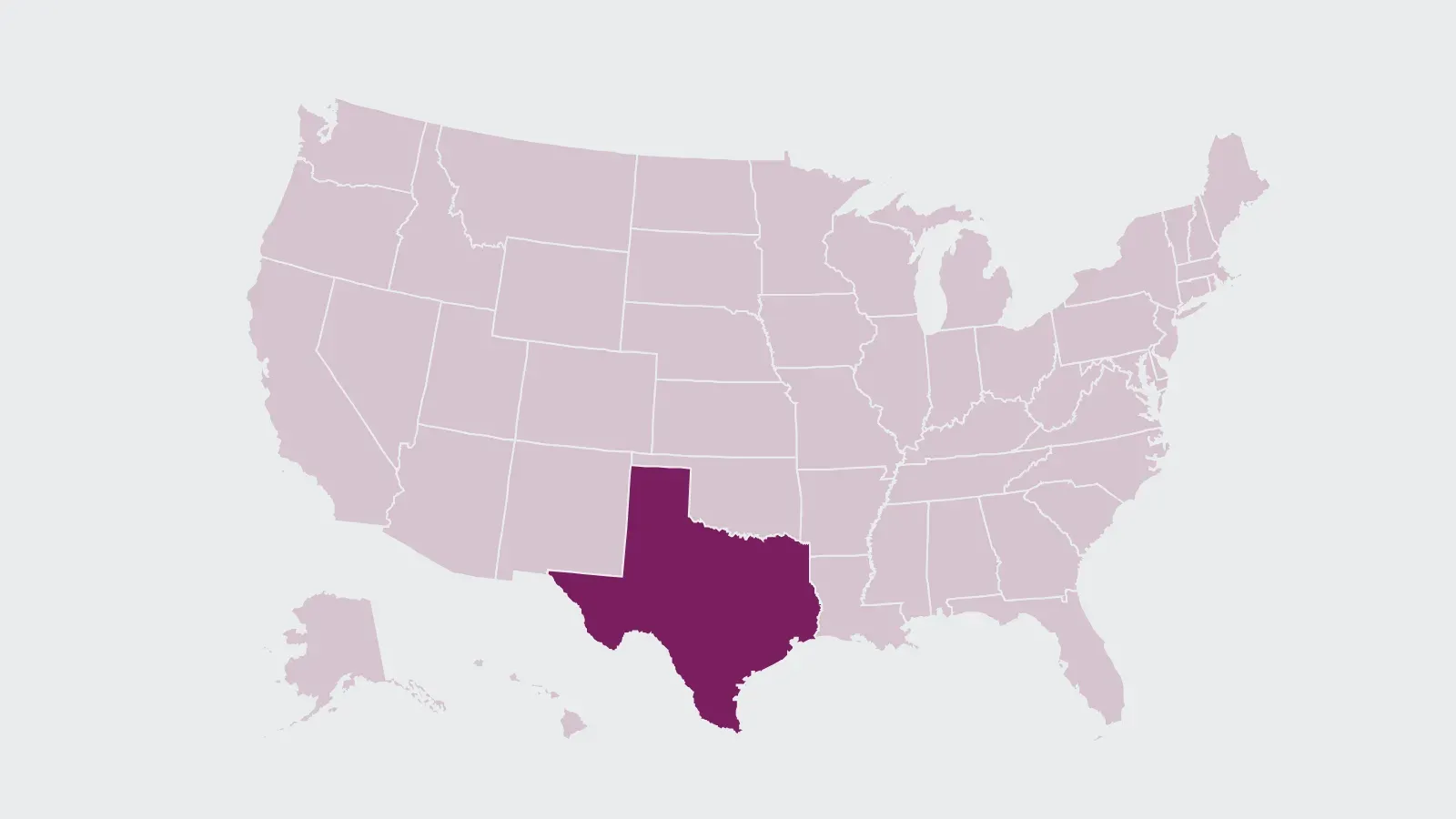
Price tier on the map
$1,250 to $1,499 a year
- Minimum liability limits
- 30/60/25
- PIP included unless rejected in writing
- Credit-based insurance scores
- Allowed, not as the only factor
- Exceptions for divorce, job loss, identity theft, a death in the family
- Regulator
- Texas Department of Insurance
The average Texas bill against the U.S.
The National Association of Insurance Commissioners (NAIC) collects what insurers actually charged in each state. Its latest state figures, for 2023, put the average Texas expenditure at $1,429 per insured car, up 16% from $1,233 in 2022. Expenditure mixes cars insured for liability only with fully covered ones; the combined premium for a car carrying all three main coverages was $1,727.
| Coverage | Texas | United States |
|---|---|---|
| Liability | $798 | $737 |
| Collision | $529 | $464 |
| Comprehensive | $400 | $238 |
| All three (combined premium) | $1,727 | $1,438 |
| Average expenditure | $1,429 | $1,282 |
Every line is above the national figure, but comprehensive stands out: at $400 it is about two-thirds higher than the U.S. average. Comprehensive pays for damage that isn't a collision, such as hail, flooding and theft, so where you park and what the weather does in your county matter more in Texas than in most states. Your own premium depends on your car, record and ZIP code; see how location sets a price.
What Texas law puts on every bill
Texas requires liability insurance of at least $30,000 for each injured person, $60,000 per accident for injuries and $25,000 for property damage, written as 30/60/25. The Texas Department of Insurance (TDI) warns that these minimums may not cover a serious crash with several cars or a totaled new vehicle.
- Personal injury protection (PIP) comes with every Texas policy. It pays medical bills and lost wages for you and your passengers whoever caused the crash. You can drop it only by rejecting it in writing.
- Uninsured/underinsured motorist coverage must be offered. With about one Texas driver in seven uninsured in 2023, by the Insurance Research Council's estimate, rejecting it in writing saves little and risks a lot.
- Collision and comprehensive are optional under state law, but a lender or leasing company will require them on a financed car.
Rejecting PIP or uninsured motorist coverage lowers the premium. Before you do, check what your health insurance and the driver who hits you would actually pay; our page on limits and deductibles walks through the trade-off.
How Texas lets insurers set prices
Texas does not approve car insurance rates before insurers use them. Companies file their rates with TDI, and if the department later finds a rate excessive it can order refunds to the policyholders who were overcharged. In practice, that leaves a wide spread between insurers for the same driver.
Insurers may use credit-based insurance scores under Chapter 559 of the Texas Insurance Code, with limits. Credit can't be the only reason a company refuses to sell, cancels or doesn't renew a policy, and a company must give you a disclosure explaining your rights. If a divorce, a temporary job loss, identity theft or the death of a close family member hurt your credit, you can ask in writing for an exception; the company may ask for documents. More on how credit-based scores affect premiums.
If no insurer will cover you
A driver turned down by two insurers can buy coverage through the Texas Automobile Insurance Plan Association (TAIPA). It sells liability, PIP and uninsured motorist coverage, not collision or comprehensive, and its rates are higher than the regular market's, with surcharges for tickets and accidents. It is a safety net to use while your record improves, as our guide to assigned risk plans explains.
Ways to bring a Texas premium down
- Compare insurers first. TDI and the Office of Public Insurance Counsel run HelpInsure.com, which shows policies and rates from Texas insurers for your area. Get two or three quotes on the same limits and deductibles.
- Ask for the discounts TDI lists: airbags, antilock brakes and anti-theft devices, a defensive driving or driver education course, more than one car, other policies with the same company, and a claims-free record. Each company decides its own amounts.
- Check the deductible. A higher collision and comprehensive deductible lowers the premium; the deductible break-even calculator shows how many claim-free years it takes to come out ahead.
- Complain if something looks wrong. TDI's Help Line is 800-252-3439, weekdays 8 a.m. to 5 p.m. Central, and complaints can be filed online.
Questions drivers ask
Is car insurance more expensive in Texas than the national average?
Yes. NAIC data for 2023 put the average Texas expenditure at $1,429 per insured car against $1,282 nationally, and the full-coverage combined premium at $1,727 against $1,438.
Why is comprehensive coverage so expensive in Texas?
Comprehensive pays for non-collision damage such as hail, flooding and theft. The 2023 Texas average was $400 against $238 nationally, and it varies a lot by county.
Can a Texas insurer raise my rate because of my credit?
Insurers may use credit-based insurance scores, but not as the only factor, and you can ask for an exception if a divorce, job loss, identity theft or a death in the family hurt your credit. See credit-based insurance scores.
Do I have to buy PIP in Texas?
PIP is part of every Texas policy unless you reject it in writing. Rejecting it lowers the premium but leaves your medical bills to your health insurance or to the other driver's insurer.
Where the figures come from
- NAIC — Auto Insurance Database Report 2022/2023 (state average premiums and expenditures)
- Texas Department of Insurance — Auto insurance guide
- Texas Department of Insurance — Credit scores and insurance
- Texas Insurance Code, Chapter 559 — Use of credit information by insurers
- HelpInsure.com — Texas Department of Insurance and Office of Public Insurance Counsel
- Insurance Information Institute — Uninsured motorists (Insurance Research Council estimates)
Facts on this page were checked against these sources on October 26, 2026. NAIC averages are for 2023, the latest year the NAIC has published by state.
Have your rate shopped
Averages can't price your car and your record. Tell us the basics of your policy and Guardbrook passes them to licensed insurance agents and insurers who can quote it; you decide whether to switch.
- 1 Your cars, drivers and current policy.
- 2 How agents can reach you, and your consent.
- 3 A licensed insurance agent or insurer contacts you with quotes. Your policy stays as it is until you decide to switch.
Guardbrook is not an insurance company or agency and doesn't sell, quote or bind policies. You pay Guardbrook nothing; the licensed insurance agents and insurers who contact you set their own prices and terms. How we make money.
Read next
-

Price factor
Location and ZIP code
2023 state averages ran from $808 to $1,864 per car. Why your address matters and where ZIP codes are barred.
-

Shopping guide
Comparing quotes line by line
Match limits, deductibles and add-ons, list every driver, compare totals with fees, then check the company.
-
Way to save
Defensive driving course discount
At least 10% in Minnesota for drivers 55+, 10% in Delaware at any age. State rules, how long it lasts, how to claim.